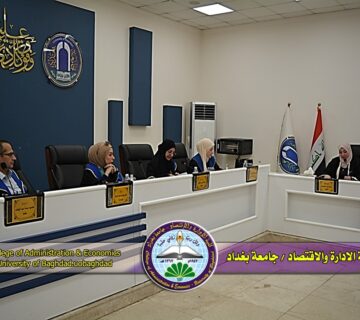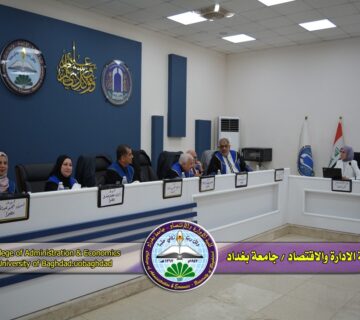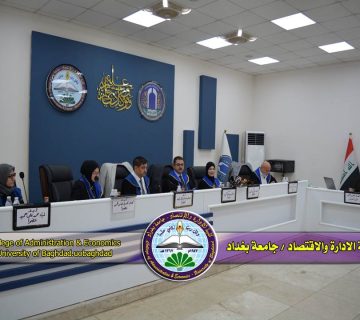
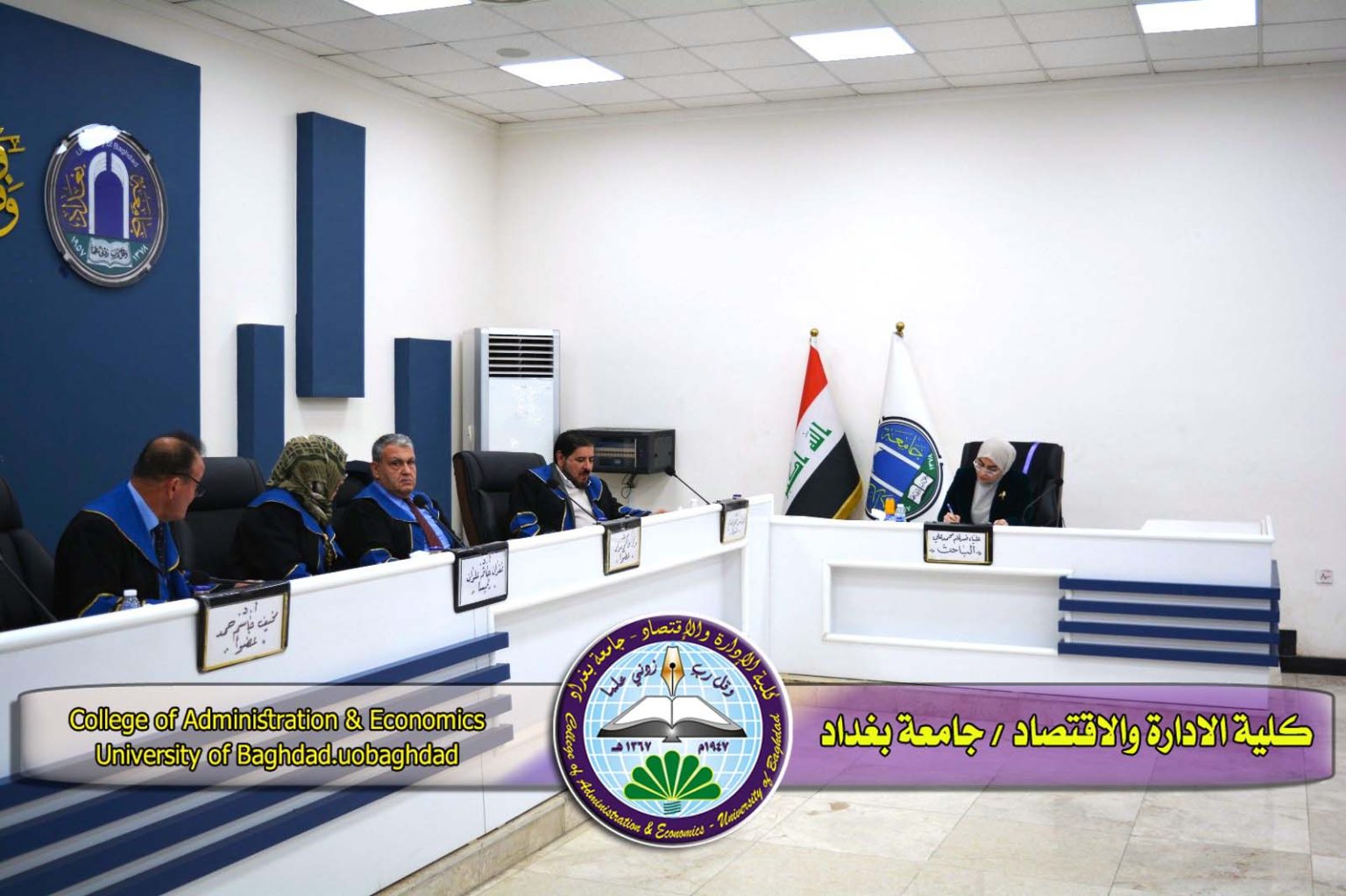
The College of Administration and Economics at the University of Baghdad discussed , a master’s thesis in field of Economics by the student ( Alyaa dhurgham mohammed ali ) and tagged with (The Role of the Circular Economy in enhancing Sustainable Development in Iraq – The battery Manufacturing Plantal waziriya) , Under supervision of ( Prof. Dr. Lawrence Yahya Saleh )
In recent decades, the world has witnessed a significant increase in the continuous demand for economic resources such as water, energy and essential minerals driven by population growth. As a result the shift from the linear economy model based on (extraction–production–consumption–disposal), to the circular economy model, based on (extraction–production–consumption–recycling), has become a fundamental pillar in promoting sustainable development worldwide.
At the national level the depletion of natural resources and assets along with traditional development projects focused primarily on achieving economic growth without considering the dimensions of sustainable development in addition to the continued use of conventional waste-disposal methods, have led to a series of environmental crises that negatively affected both ecosystems and humans. Accordingly, the problem of this study is reflected in the following two questions:
1. Has the circular economy played a pivotal role in promoting sustainable development in Iraq during the period (2013-2023)?
2. What is the effectiveness of the battery industry in Al-Waziriyah-Babel Factory (1, 2) in adopting circular economy practices during the period (2013-2024)?
Thus, this study aims to examine the reality of the circular economy and sustainable development in Iraq for the period (2013–2023) in addition to conducting a field study on the role of the circular economy in enhancing sustainable development in the battery manufacturing plant in Al-Waziriyah-Babel Factory (1, 2) for the period (2013–2024). The study relied on both the deductive and inductive approaches using the descriptive–analytical method to clarify the role of the circular economy in promoting sustainable development in Iraq.
The study concluded that the application of the circular economy model in Iraq remains weak due to inadequate waste-management infrastructure and limited legislation and policies supporting this model. In contrast, the application of the circular economy model in Babel Factory (1, 2) demonstrates an important role, which necessitates establishing and developing waste-management infrastructure and utilizing it as an economic resource, while expanding the scope of circular economy practices in the battery manufacturing industry.