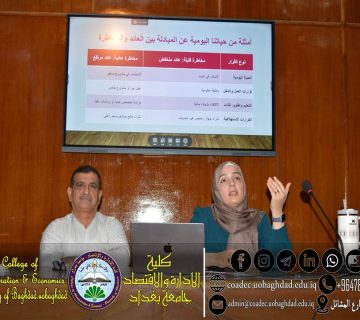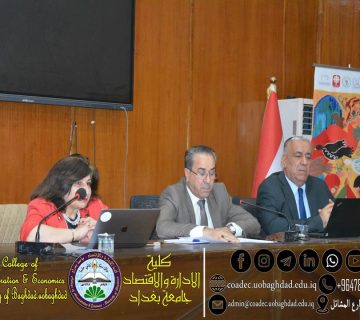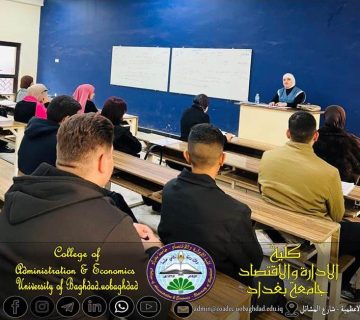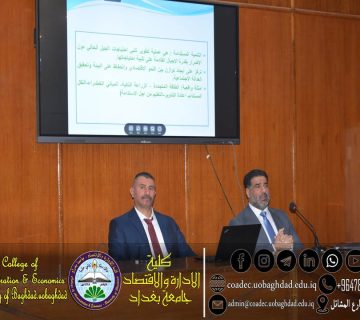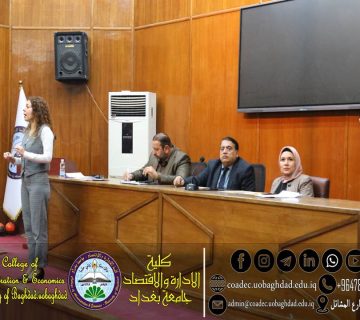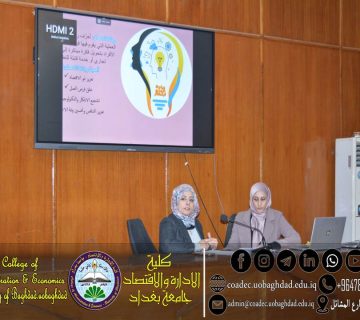
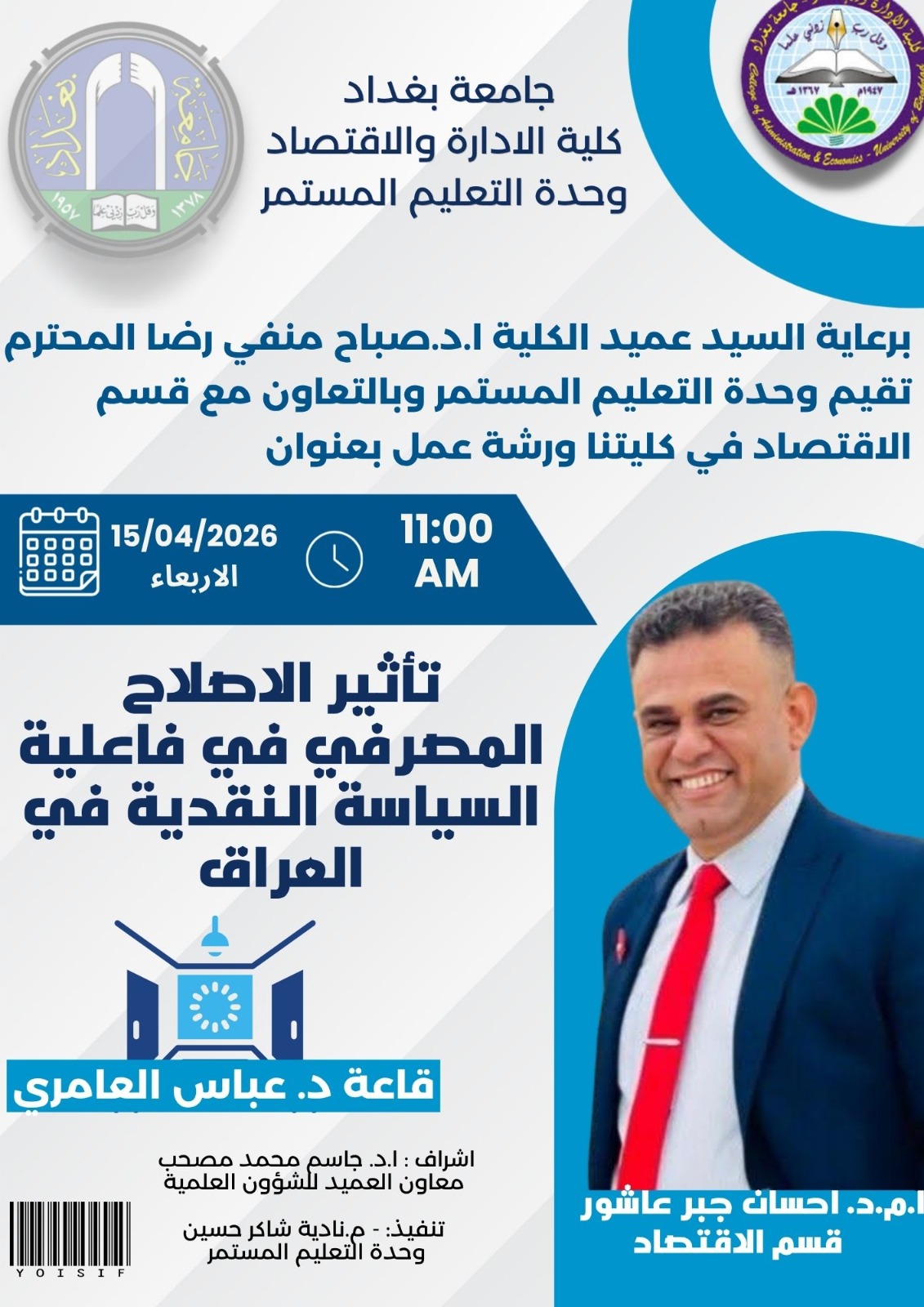
The Continuing Education Unit, in cooperation with the Department of Economics, organized a scientific workshop entitled “The Impact of Banking Reform on the Effectiveness of Monetary Policy in Iraq.” The workshop was delivered by Dr. Ihsan Jabr Ashour.
The workshop aimed to highlight the fundamental relationship between banking sector reform and the effectiveness of monetary policy tools. It explained that the impact of monetary policy—such as controlling interest rates and money supply—does not directly reach the real economy; rather, it largely depends on the strength and efficiency of the banking system as a transmission channel for these policies.
The lecturer addressed the key pillars of banking reform, which include:
- Restructuring banks
- Strengthening supervision and regulatory frameworks
- Enhancing transparency and governance
- Developing the technological infrastructure of the banking system
Dr. Ihsan Jabr Ashour emphasized that a strong banking sector is a prerequisite for enhancing the effectiveness of monetary policy. He noted that reform improves the transmission channels of monetary policy, namely: interest rates, bank credit, expectations, and exchange rates.
The workshop concluded that banking reform is a fundamental requirement for the success of monetary policy, as it enhances lending, increases confidence in the banking system, and contributes to achieving financial stability.
It also identified key conditions necessary for the successful implementation of these reforms in Iraq, including:
- Political will
- Security and economic stability
- Ensuring the independence of the Central Bank
- Reducing financial and administrative corruption
- Developing banking infrastructure