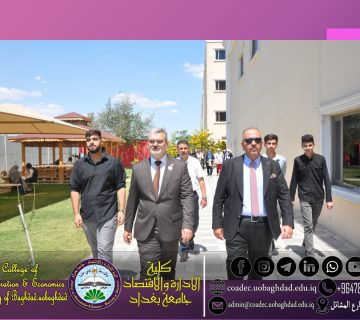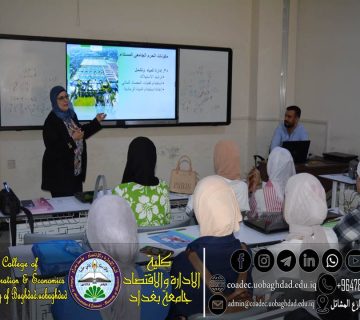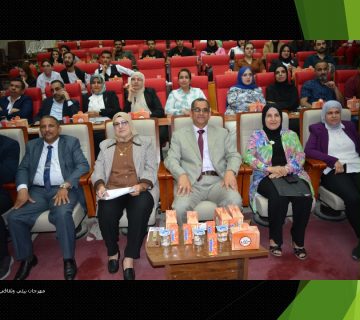

Professor Dr. Sabah Munfi Ridha, Dean of the College of Administration and Economics, participated in a specialized workshop organized by the General Secretariat of the Council of Ministers at the Prime Minister’s Guest House. The workshop aimed to shed light on Iraq’s position in international indicators, based on the World Economic Forum’s report, with a particular focus on the Education and Training pillar.
The participation of the Dean of the College came following an invitation from the organizing body to discuss the results of the analysis of the World Economic Forum’s indicators concerning Iraq and to identify the strengths and challenges associated with the Education and Training pillar.
The workshop also reviewed a number of proposals concerning strategic plans, policies, and initiatives aimed at developing the services provided and improving Iraq’s ranking in the report issued by the World Economic Forum. The Iraqi Council of Ministers’ programme seeks to achieve comprehensive financial and economic reform by highlighting strengths and weaknesses within the state’s institutional structure, diversifying sources of national income, reducing the country’s dependence on oil revenues, and directing government expenditure towards the optimal investment in strategic and service-oriented projects.
Contribution to the Sustainable Development Goals :
The participation contributed to the achievement of a number of the United Nations Sustainable Development Goals (SDGs), including:
- Goal 4 – Quality Education: The participation of the Dean of the College in a workshop addressing education and training indicators reflects Iraq’s commitment to improving the quality of education and ensuring better educational outcomes, which lies at the core of SDG 4.
- Goal 8 – Decent Work and Economic Growth: Comprehensive financial and economic reform, diversification of national income sources, and reducing dependence on oil are all measures that contribute to promoting sustainable economic growth and creating decent employment opportunities.
- Goal 9 – Industry, Innovation and Infrastructure: Developing strategic policies and initiatives to improve services contributes to fostering innovation and building strong educational and economic infrastructure.
- Goal 16 – Peace, Justice and Strong Institutions: The Council of Ministers’ efforts to identify strengths and weaknesses within the state’s institutional structure reflect the pursuit of more efficient, effective, and transparent institutions.
-
Goal 17 – Partnerships for the Goals: The workshop, which brought together academics and government institutions, represents a model of effective partnership between educational institutions and policymakers in support of sustainable development and the achievement of national development objectives.